Short answer: Start Warhammer 40K in four steps: buy a starter box (around $100–150), build and paint 10–15 models with a simple scheme, learn the core rules through 500-point games, then grow to a full 1,000-point army. Don’t plan a 2,000-point list or buy a huge haul on day one — the hobby rewards small, finished steps.
Disclosure: Warpstorm is an unofficial fan site. Some links on this page are affiliate links — if you buy through them, we may earn a small commission at no extra cost to you. We are not affiliated with or endorsed by Games Workshop.
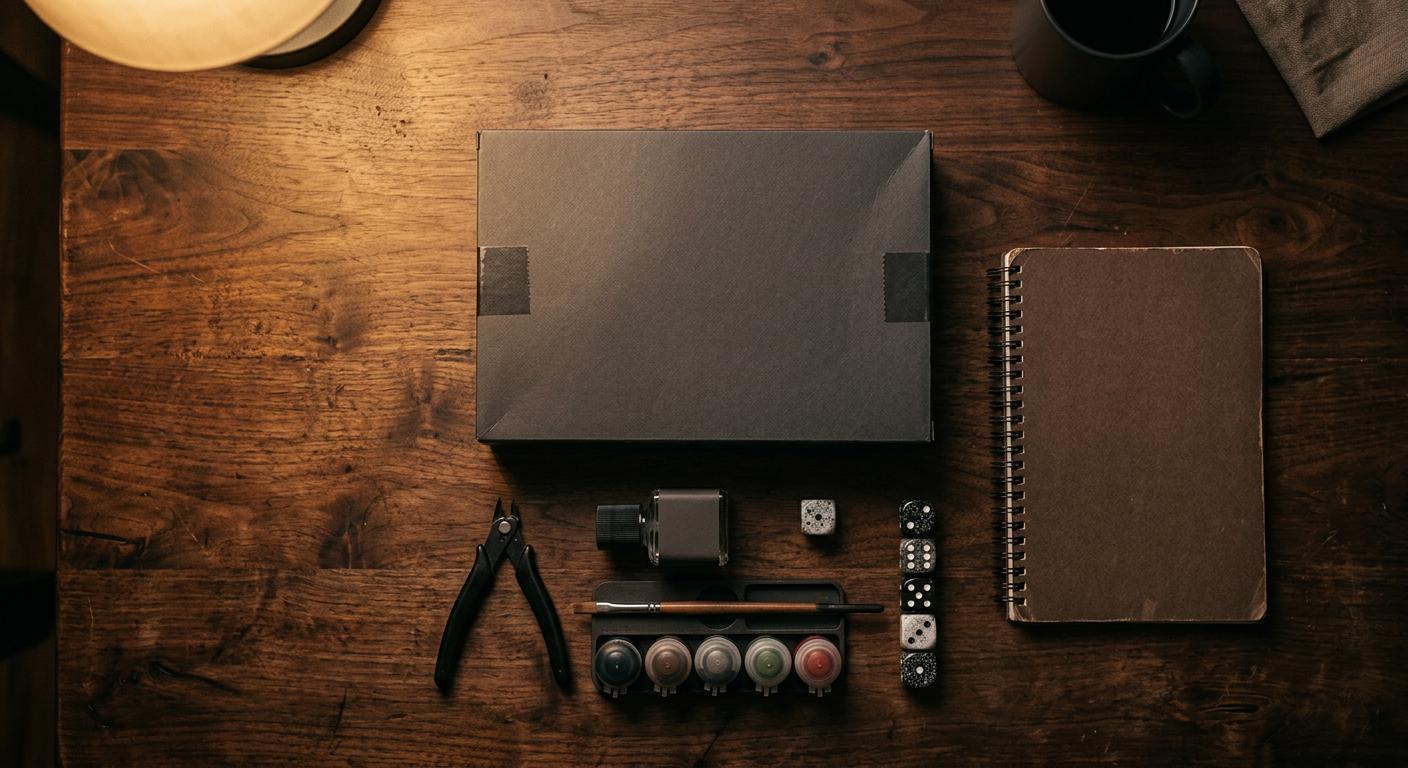
Step 1: Buy a Starter Box (Not a Big Haul)
The single biggest beginner mistake is buying $400 of models before playing a single game. A starter box gives you everything in one purchase:
- Two small armies (so you can play with a friend or demo both sides)
- Dice, measuring ruler and the core rules
- A clear path: assemble → paint → play
What to buy: the current main starter set (Space Marines vs. Tyranids or Space Marines vs. Necrons, depending on the edition box in stores). Add side cutters, plastic glue and 3–4 paint pots if the box doesn’t include them — budget another $30–40.
👉 Not sure which faction? Read Best Warhammer 40K Army for Beginners — short version: Space Marines for the safest start, Necrons for the best-looking easy army.
Step 2: Build Your First 10–15 Models
Assembly tips that save beginners hours of pain:
- Cut sprues with side cutters, never twist parts off — twisted plastic leaves marks and stress lines.
- Dry-fit before gluing. Test that legs, torso and arms line up before any glue touches plastic.
- One unit at a time. Ten finished models beat fifty half-assembled ones rotting in a drawer.
- Keep the sprues. They hold small parts (pouches, grenades, bases) you’ll want later.
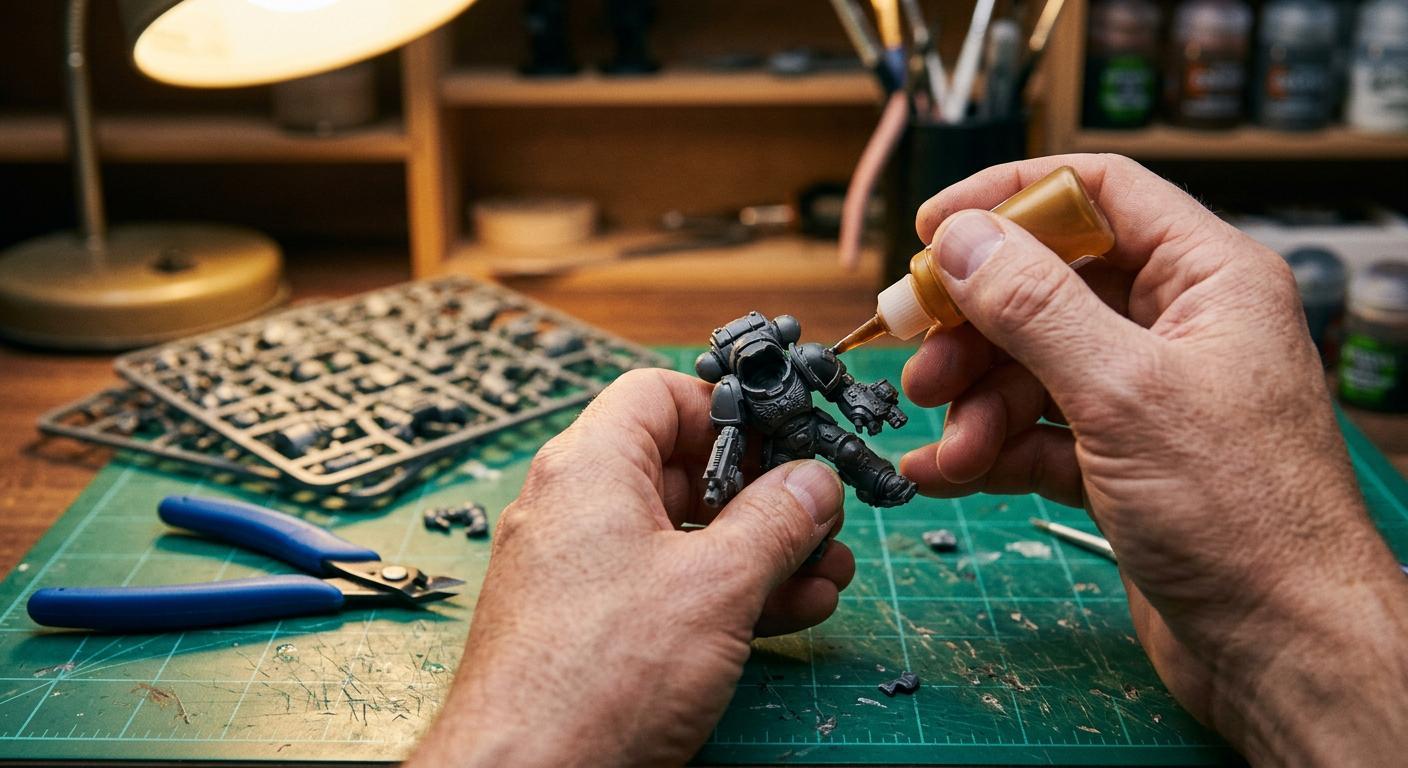
Step 3: Paint Them “Table-Ready” (Not Perfect)
Beginner paint formula that always looks decent:
1. Spray undercoat (black or grey primer) 2. Basecoat one main colour (drybrush or two thin coats) 3. Wash (a shade paint like Nuln Oil — this does 50% of the work for you) 4. Highlight edges lightly with a lighter colour
Total time: 20–30 minutes per model. A full 500-point army takes a weekend or two of evenings. “Table-ready” — not competition-level — is the goal. Your models will look better than you expect from three feet away, which is exactly how anyone will see them across a table.
Step 4: Learn the Rules With Small Games
- Start at 500 points. Small games teach movement, shooting, charges and objectives without overwhelming you.
- Use the free core rules. Games Workshop publishes the basic rules as free PDFs — you don’t need the full rulebook on day one.
- Play your local store. Most stores run beginner nights or will happily teach a new player. Turn up with painted models and you’ll always find an opponent.
- Lose your first five games. It’s the standard experience. You’re learning objectives and sequencing, not winning yet.
Step 5: Grow to 1,000 Points (Over Months, Not Days)
Once you’ve played a handful of small games:
- Expand the units you actually enjoyed playing
- Add one big centrepiece model (a tank, a Monolith, a big hero) — it’s the fun reward of the hobby
- Aim for 1,000 points as your first “real” army — it’s the most common casual game size
Budget reality: a complete 1,000-point army typically lands around $250–400 all-in (models, paint, tools), spread over 2–4 months. That’s much cheaper than most hobbies — and cheaper than buying everything at once and quitting.
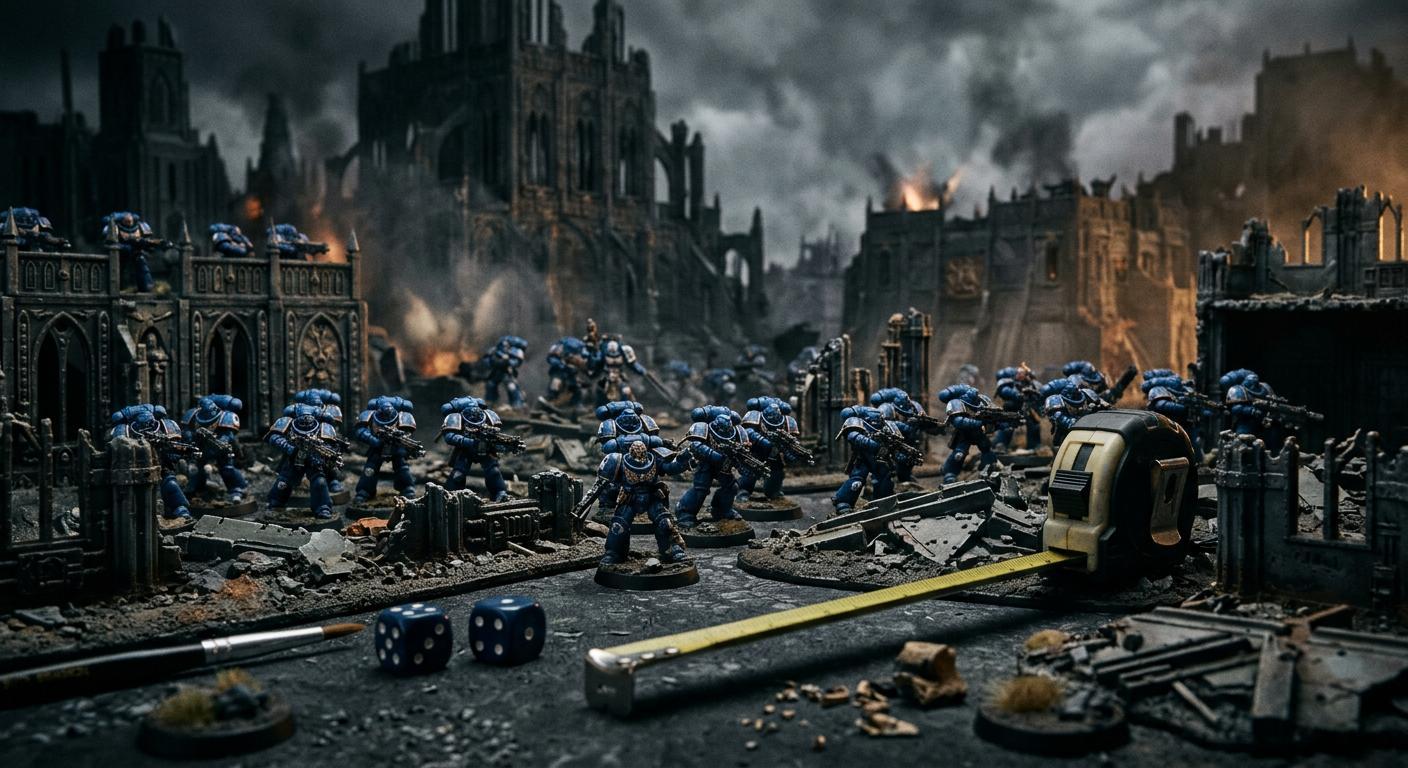
Common Beginner Mistakes to Avoid
- Buying a meta list off the internet before knowing how you like to play
- Skipping paint to “get gaming faster” — grey plastic armies kill motivation
- Playing only big games — you learn faster in ten 500-point games than two 2,000-point ones
- Perfectionism on the first models — your first squad is allowed to be ugly. Finish it.
FAQ — How to Start Warhammer 40K
How much does it cost to start Warhammer 40K? Around $130–190 to start properly: a starter box ($100–150) plus basic tools and paints ($30–40). Your first 500-point army is playable with nothing else.
Is Warhammer 40K hard to learn? The core loop (move, shoot, charge, fight, score objectives) is learnable in one evening. Mastery takes months, but the free core rules plus a couple of small games are enough to play properly.
Do I need the full rulebook to start? No. The core rules are free from Games Workshop, and starter boxes include a trimmed-down rules set. Buy the full rulebook when you’re hooked, not before.
How long until I can play a real game? One to three weekends: assemble one box (an evening or two), paint a simple scheme (a weekend), then book a 500-point game. Playing unpainted models is also fully accepted at stores.
Should I start with 10th edition? Yes — this is the simplest edition for beginners in years, with free core rules, clean datacards and an active beginner scene. There’s no reason to wait.
Can I play alone? Casual solo practice games work fine for learning rules, and kill-team-sized skirmish modes are popular solo. But the social side — store nights, tournaments, painting days — is half the hobby, so find a local opponent early.
Your First 30 Days at a Glance
| Week | Goal |
|---|---|
| 1 | Buy starter box + tools, assemble first 10 models |
| 2 | Paint them table-ready (basecoat → wash → highlight) |
| 3 | Learn core rules, play your first 500-point game |
| 4 | Paint a second unit, book another game, decide your army |
Start Building
- 👉 Best Warhammer 40K Army for Beginners — Space Marines vs. Necrons, compared
- 👉 Best Warhammer 40K Starter Set in 2026 (Compared) — which box to buy first
- 👉 Space Marines Beginner Army Guide — your first 1,000 points
- 👉 Necrons Beginner Army Guide — the easiest non-Marine start
The only real rule: finish your first ten models. Everything else in this hobby follows from that. Get the starter set that fits your army →
Warpstorm is an unofficial fan site. Warhammer 40,000 is a trademark of Games Workshop. This site is not affiliated with or endorsed by Games Workshop.
Leave a Reply